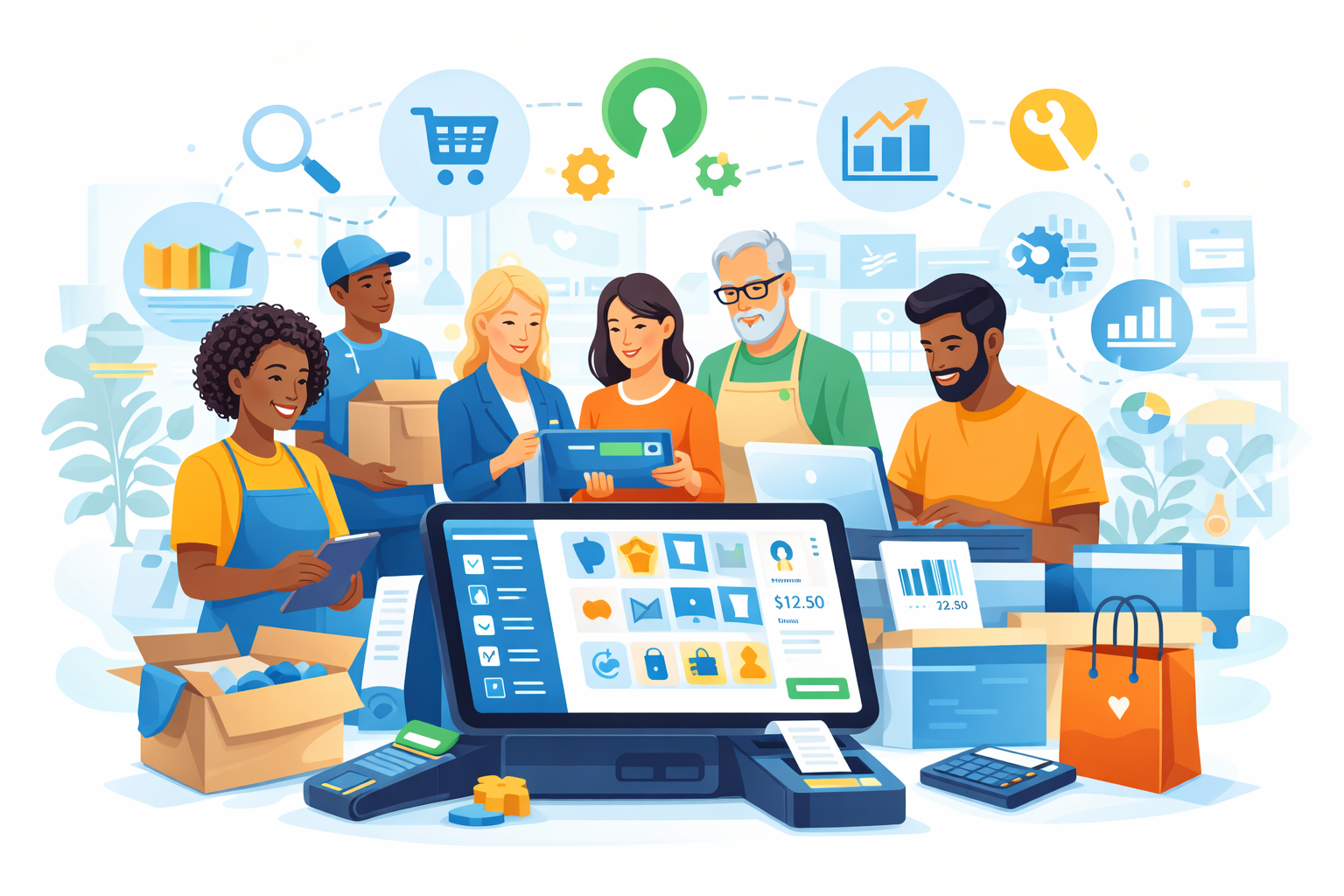
A restaurant POS choice usually isn’t about one “best” feature. Instead, it’s about the full day-to-day impact—how much work the system adds, how much trouble it prevents, and how well it keeps service moving during busy hours. Even though people call it a “cost breakdown,” you can judge it without using numbers by looking at what you invest in time, focus, and technical effort. In this article, we compare a typical SaaS restaurant POS with a Free open-source POS in a practical, restaurant-first way. As a result, you can pick the option that matches your staff, your menu setup, and your long-term growth plan.

What a POS Cost Breakdown Really Means
First, note everything your POS “uses up”—staff time, device setup, internet reliance, training time, and how you’ll get help when something breaks. Next, write down what it must handle every day: correct orders, smooth table service, clear reports, proper tax settings, and strong manager controls. Then, compare each option on setup effort, daily maintenance, and how easily it can grow with your restaurant. Finally, think about your risk level, because downtime, new staff, and menu updates can expose weak systems much faster than any spreadsheet.
SaaS POS Ownership in Real Life
A SaaS POS usually takes the technical load off your plate. So, you often get guided setup, automatic updates, and one clear support team to contact. However, you also depend on the vendor, follow their renewal model, work within feature tiers, and plan ahead for exporting data if you ever switch systems. Therefore, you should confirm integrations, offline mode, and data ownership upfront to avoid surprises later. As a result, SaaS can feel easy for daily operations, but it may feel limiting if your restaurant needs unique workflows.
Free Open-Source POS Ownership In Real Life
A free open source POS removes license limits and gives you more freedom to customize. So, you can build workflows that match how your restaurant serves guests, instead of forcing your team to follow a fixed setup. Still, “free” only means the license costs nothing—it doesn’t mean the system runs itself. In real life, you handle installation, backups, updates, security basics, and your support plan. Because of that, open source works best for restaurants that want more control and can manage the technical side consistently. Learn more about Restaurant POS Must Have Features for Faster Service.
Workflow-First Feature Checks For Restaurants
Test your POS during a real Friday-night rush, not from a feature list. The counter must create tickets fast, handle modifiers/holds/splits, and close payments smoothly. The kitchen needs clean routing and timing, while managers need permissions, cash control, and clear reports. For a free open source POS, confirm it supports:
- Fast order entry + hold/send/save.
- Dine-in, takeout, and custom order types.
- Back-office setup + daily reporting.
- Sales tax + tax-included options.
- Cash drawer, tips, and void approvals.
- Table service for dining + bar.
For SaaS, test the same flow and also check weak internet performance and peak-hour update impact.

The Real “Breakdown”: Seven Ownership Categories
You can compare both POS models using these clear categories, then rate each one as low, medium, or high effort for your team.
A) Setup and onboarding
SaaS systems usually provide a guided setup process. In contrast, a free open source POS often requires you to plan the environment and configure the system to match how your restaurant actually operates.
B) Hardware and terminals
Both options rely on reliable devices, printers, and networking. However, open-source setups usually offer more flexibility in hardware choices and database use, which can help in multi-terminal environments.
C) Reliability during service
SaaS performance depends on internet stability and the vendor’s infrastructure. Meanwhile, open-source systems can run locally when designed that way, although you must maintain the local setup carefully.
D) Updates and security discipline
SaaS providers typically handle updates for you. On the other hand, open source places update and security responsibility on your team. Therefore, you should assign clear ownership and follow a documented update routine.
E) Support and troubleshooting
With SaaS, support usually comes directly from the vendor. With open source, you depend on documentation, community resources, and internal skills. Since many open-source releases are provided “as is,” planning a support strategy early is essential.
F) Customization and extensions
SaaS platforms often limit deep customization. By contrast, a Free open source POS allows greater flexibility because the source code remains accessible and extensible, including plugin options or upgrade paths.
G) Growth and multi-location rollout
SaaS can feel easier when expanding because vendors standardize deployment. However, open source can scale effectively when you create repeatable setups, such as shared database templates, terminal configurations, and a clear training playbook.
When you score each category honestly, the right choice becomes obvious—pick the model that your team can operate and maintain every single service day.
Which Model Fits Which Restaurant
Choose SaaS if you want a simple, standardized system that your busy team can run without making many technical decisions. Also, SaaS works well for multi-location restaurants that need consistent training, predictable updates, and one reliable support channel.
Choose a free open-source POS if you want more control over workflows, data access, and customization. In addition, open source can suit independent restaurants that prefer local ownership and can assign someone to manage backups, updates, and troubleshooting. However, avoid open source if nobody can handle ongoing maintenance, because missed updates and unclear setup notes can turn small problems into major service-night issues.

Conclusion
A restaurant POS “cost breakdown” makes more sense when you compare ownership factors instead of using numbers. SaaS can reduce your technical workload, while a free open-source POS gives you more control and deeper customization when you maintain it consistently. If you want a reliable open-source restaurant POS option, Floreant POS stands out with a complete ecosystem—downloadable builds, clear documentation, and full source-code access—so you can run it your way, customize it as you grow, and keep long-term ownership of your system.