Restaurants operate in an environment where speed, consistency, and control decide daily success. However, many POS platforms limit flexibility by hiding how the system works and by restricting meaningful customization. Therefore, a pos with source code access becomes valuable because it allows operators to understand, adapt, and govern the software that runs their business. Instead of reacting to vendor limits, restaurants can design workflows that fit real service conditions and long-term goals.
What Source Code Access Actually Changes for a Business
Source code access shifts your POS from a fixed product into a controllable system. Therefore, you stop relying on vendor limits, and you start shaping workflows, controls, and long-term stability around your operation.
- You gain the ability to customize order and kitchen flow so the POS matches your service style instead of forcing staff to follow awkward steps.
- Strengthen control and accountability because you can tighten permissions, approvals, and logging for voids, discounts, and sensitive actions.
- You protect continuity because you can maintain, fix, and extend the POS without waiting for a vendor release cycle or forced upgrades.
- You improve data confidence because you can verify how totals, taxes, reports, and exports behave and then correct gaps when they appear.
In short, source code access turns your POS into an asset you can govern. Consequently, you reduce lock-in risk, increase operational fit, and keep the system aligned as your business grows.
Operational Features That Justify Source Code Access
Source code access delivers the most value when paired with practical restaurant functionality. Therefore, you should evaluate the POS through everyday use cases.
A) Order Flow and Menu Structure
Restaurants manage modifiers, combos, and pricing rules daily. Consequently, the POS must handle complexity without slowing service. Clean order flow ensures that what guests order matches what the kitchen receives and what appears on the check.
B) Kitchen Workflow and Routing
Kitchen efficiency depends on clarity. Therefore, routing rules, ticket formatting, and timing must remain predictable. When the POS supports clear kitchen output, teams reduce errors and maintain steady production even under pressure.
C) Manager Controls and Accountability
Strong controls protect cash and reduce conflict. Therefore, role-based permissions, approval requirements, and activity tracking help managers maintain discipline. Additionally, structured end-of-day routines improve accuracy and reduce reconciliation stress.
D) Reporting and Decision Visibility
Restaurants need clean daily numbers to control food cost, labor, and cash flow. Therefore, the POS should produce consistent sales summaries, category performance, and shift-level accountability without manual fixing.
In short, source code access matters most when the POS supports real operations, not just checkout. Consequently, strong workflows plus clear reporting turn the system into a stable, controllable engine for daily performance.

Security, Transparency, and Long-Term Confidence
Transparency builds trust. When you can inspect how a POS handles permissions, data, and calculations, you reduce uncertainty. Therefore, source code access supports better security practices because vulnerabilities can be reviewed and addressed intentionally. Additionally, you can enforce stronger internal controls by tightening role rules, approvals, and access boundaries. As a result, your team reduces exposure to misuse, misconfiguration, and silent errors that leak money.
Additionally, transparency improves long-term confidence. As regulations, taxes, or operational needs change, you can adapt without waiting for external approvals. Over time, this confidence translates into smoother operations and fewer forced migrations. Moreover, you can validate changes in a controlled way, so updates do not break live workflows. Consequently, you protect continuity because you plan upgrades on your schedule, not under pressure. Learn more about Open Source POS Software with Source Code.
Evaluate Before You Commit
Use these checks to confirm the POS fits real service flow and stays stable under pressure.
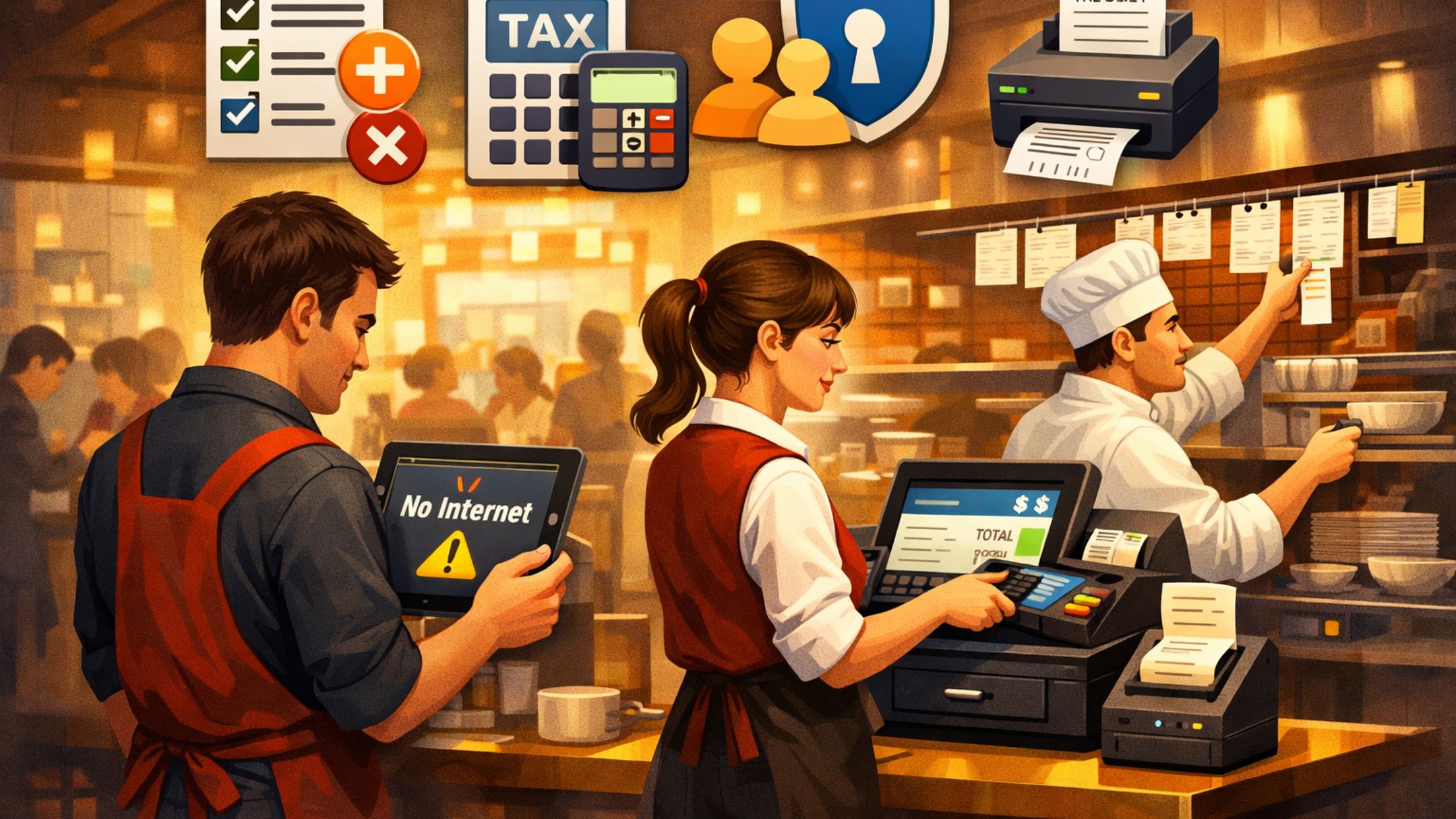
i. Offline test: Cut the internet and confirm orders, totals, and printing still work.
ii. Kitchen test: Route tickets to each station and verify timing stays consistent.
iii. Controls test: Review roles, approvals, and action logs for discounts and voids.
iv. Backup test: Create backups, restore fully, and confirm data stays accurate.
v. Rush-speed test: Run peak-volume orders and confirm screens respond without lag.
If the POS passes these five checks, you reduce launch risk and protect daily operations.
Total Cost of Ownership and Long-Term Support
POS cost includes time, downtime, and upgrade friction, not just purchase. Therefore, evaluate the system across a full operating year.
1. Upkeep time: Updates, backups, and fixes consume hours when routines stay unclear. So, set a simple schedule to keep the system stable.
2. Hardware churn: Locked hardware raises replacement costs during failures or expansion. So, keep flexibility so swaps stay fast and affordable.
3. Downtime risk: Outages hit hardest during peak hours and busy weekends. So, test restores and keep a clear recovery plan.
4. Support continuity: Costs rise when only one person knows the setup. So, document steps and keep an escalation path ready.
Ownership stays low when upkeep stays predictable and recovery stays tested. Support stays strong when knowledge stays shared, not trapped.
Conclusion
Restaurants perform best when systems align with real workflows and remain adaptable over time. However, many platforms sacrifice control for convenience and increase dependency as operations grow. When you control the logic behind ordering, permissions, and reporting, you reduce daily friction, and you protect consistency during rush hours. A pos with source code access restores ownership because it allows transparency, customization, and disciplined evolution. Solutions such as Floreant POS illustrate how this model can support offline stability and operational control.

FAQs
1) What is a POS with source code access?
It is a POS system that allows you to view and modify the software code, enabling customization and transparency.
2) How does source code access help restaurants long-term?
It helps because restaurants can adapt workflows, improve controls, and avoid dependency on fixed vendor roadmaps.
3) Why is offline capability still important?
Offline capability protects order flow during connectivity issues and keeps service consistent during peak hours.
4) What should restaurants test before going live?
They should test peak performance, offline behavior, kitchen routing accuracy, manager controls, and backup reliability.