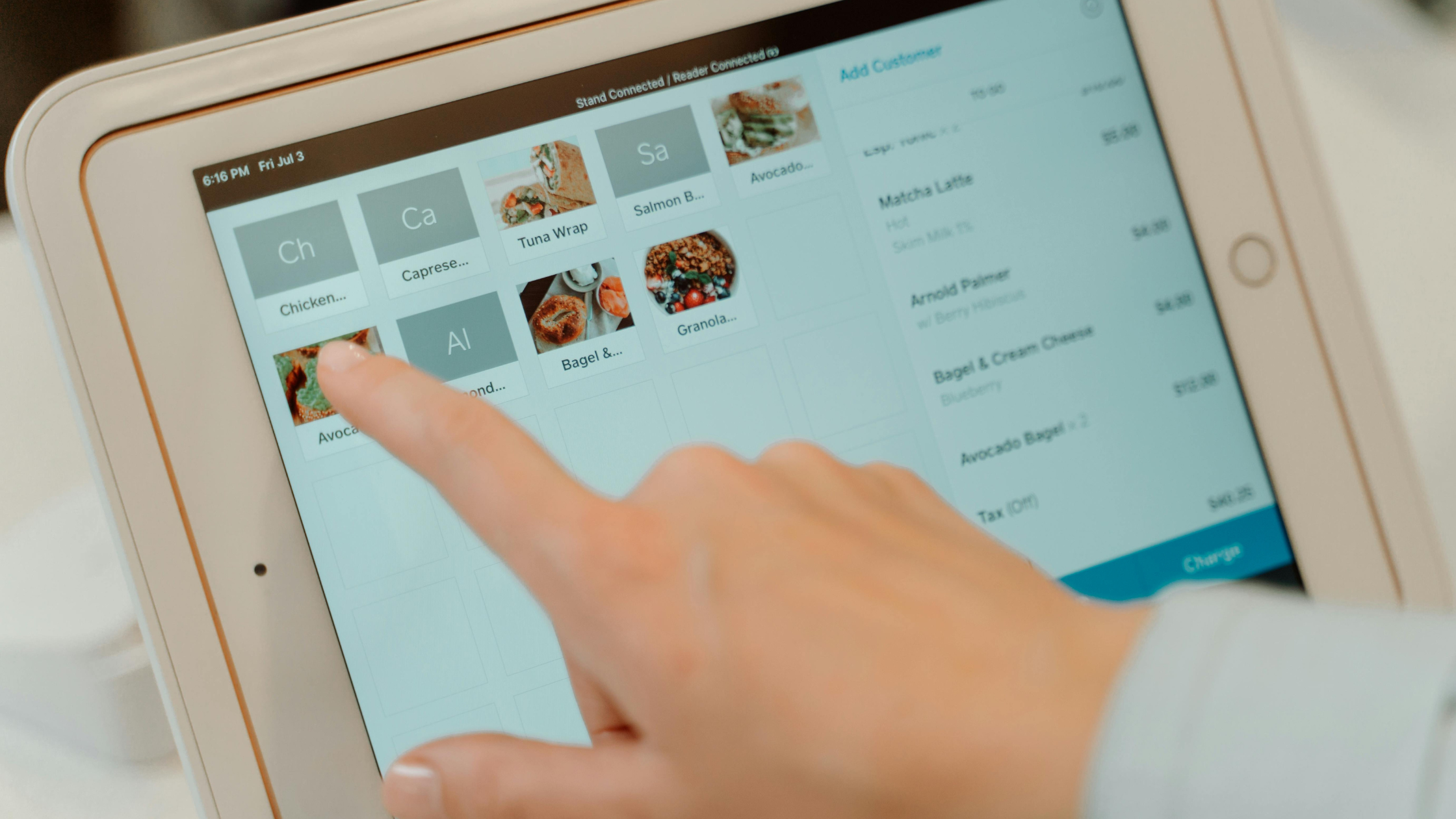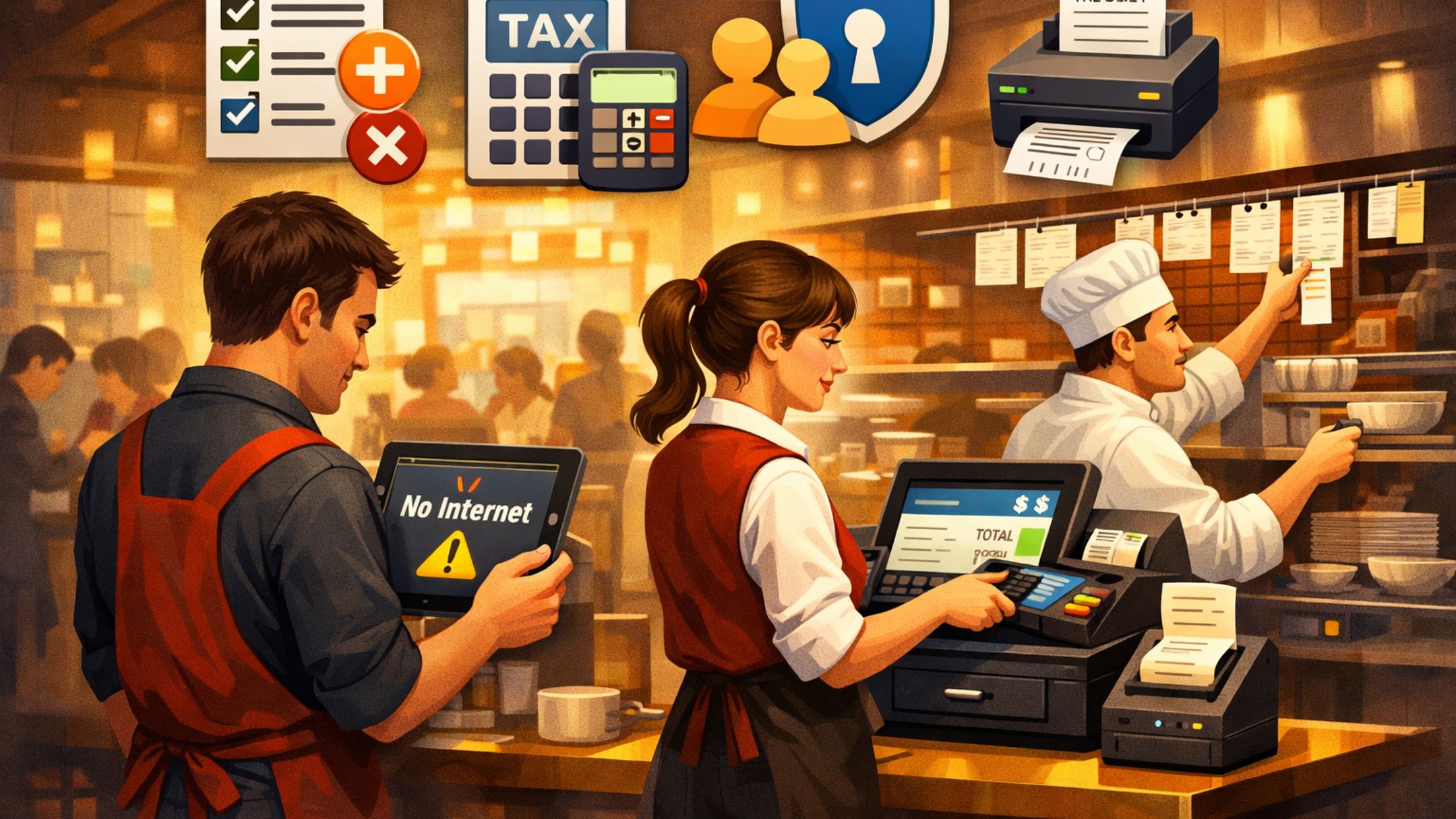
When selecting a point-of-sale system, understanding cloud POS vs. offline POS is critical. Every business owner wants a system that speeds up operations, ensures reliable data, and improves customer experience. However, the choice between cloud-based and offline point-of-sale systems often leaves many decision-makers confused. In this article, we’ll explain both types clearly, compare their benefits, and show why the right choice matters for restaurants, cafes, and small retail businesses.
What Is a POS System?
A point-of-sale (POS) system is where customers complete transactions with a business. Modern POS systems also manage inventory, track sales, and generate reports. These systems come in two major types: cloud POS and offline POS.
In addition, a POS supports daily operations. It helps staff take orders faster, reduce billing mistakes, and keep service smooth during rush hours. It also organizes pricing, taxes, discounts, and staff activity in one place, so owners can make faster decisions and keep transactions trackable.
What Is a Cloud POS?
A cloud POS stores data on remote servers and relies on the internet. Since data stays in the cloud, owners can access real-time sales, reports, and inventory from anywhere online. These systems often use subscription pricing and receive regular feature updates.
Key features of cloud POS include:
- Real-time data access from any device.
- Automated backups and frequent software updates.
- Remote management and multi-location support.
- Scalability for growing operations.
Cloud POS fits businesses that want remote visibility, fast scaling, and always-updated tools—backed by a stable internet connection.
What Is an Offline POS?
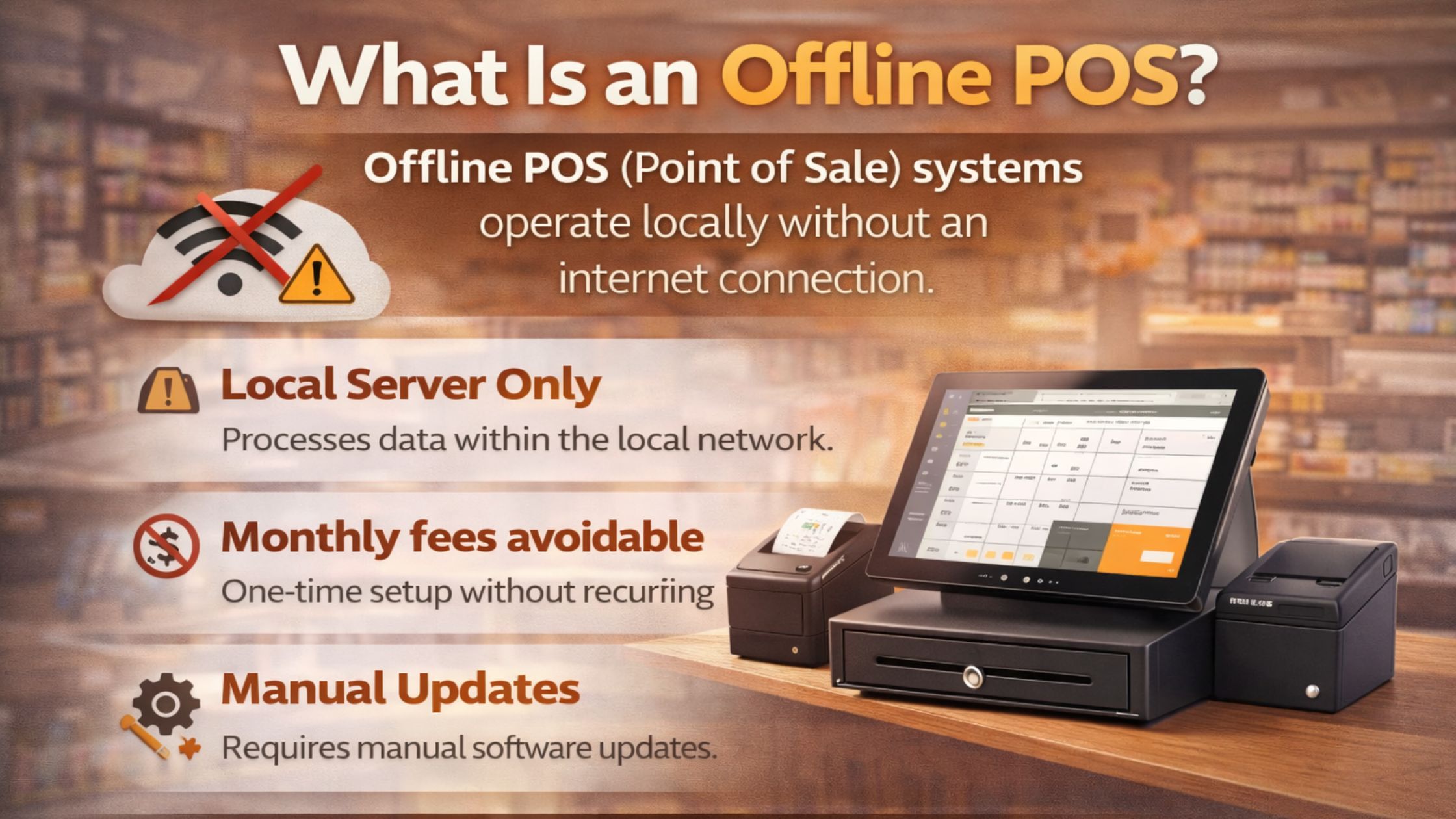
An offline POS works without requiring continuous internet access. It stores all transaction data directly on local hardware, ensuring operations continue even during internet outages. Floreant POS is a notable example of an offline POS solution that businesses can install locally on tablets or computers.
With offline POS, all essential data, such as transaction records and inventory, remains on your own devices. This makes it ideal for environments where internet connections are not stable or unavailable, while still keeping billing, reporting, and daily operations running smoothly.
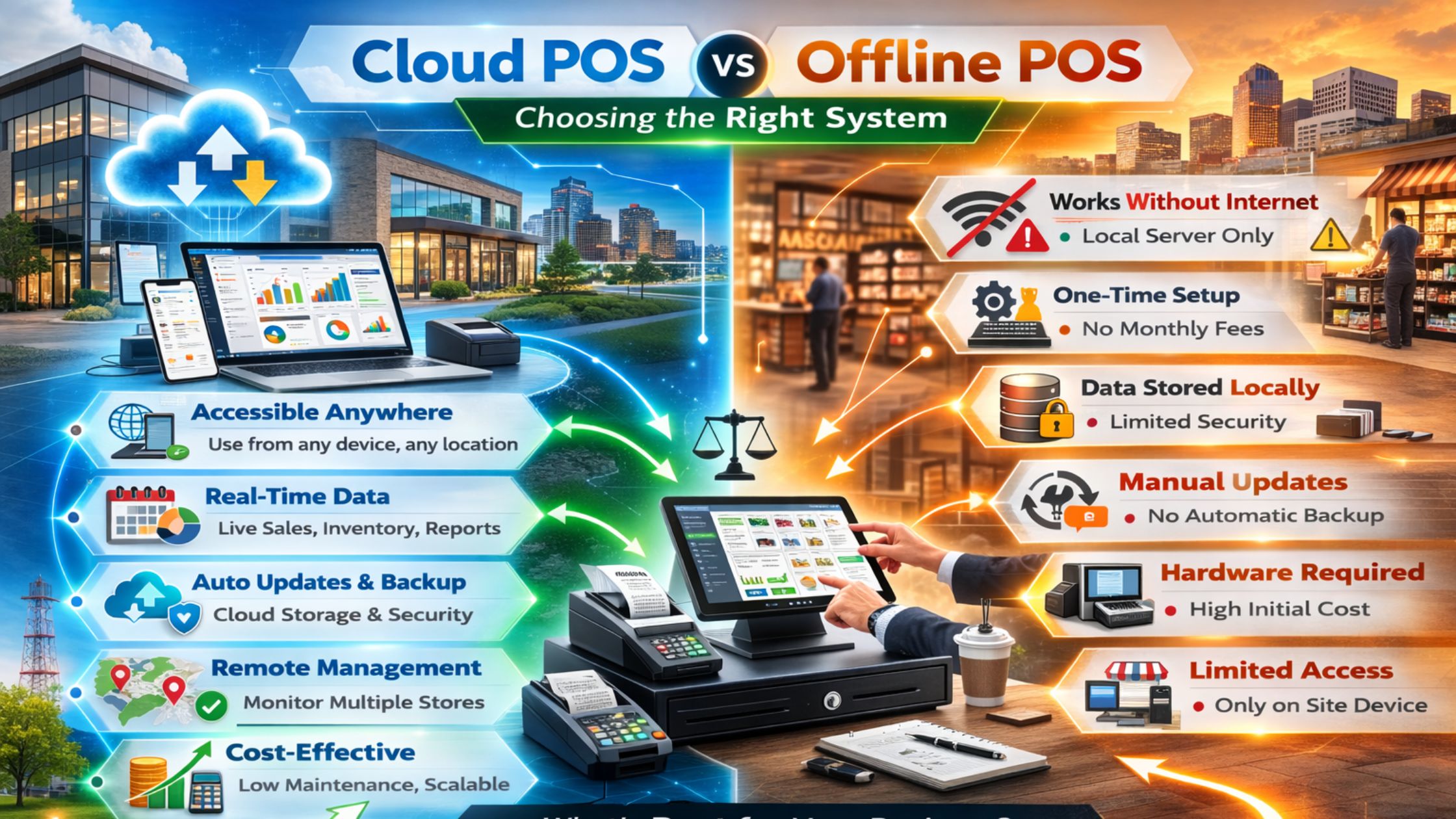
Cloud POS vs Offline POS: Key Differences
Understanding the differences between cloud POS and offline POS can help you choose the best system for your unique needs.
1. Internet Dependency
Cloud POS requires a stable internet connection to function. In contrast, offline POS operates independently of the internet, so your business won’t face operational downtime even if the internet fails.
2. Data Storage
With cloud POS, data is stored on remote servers that you can access from anywhere. Offline POS saves data locally on your device, giving you direct control over your information without relying on external servers.
3. Cost Structure
Offline POS systems typically charge monthly or yearly fees, which may include feature upgrades and support. Offline POS like Floreant POS is free to download, install, and use because it is open-source.
4. Security
POS systems depend on the provider’s security measures and may expose some data to third parties. Offline POS keeps data within your own network, reducing exposure. However, local security practices become your responsibility.
5. Remote Access
With cloud-based POS, you can access real-time reports, sales data, and inventory updates from anywhere, providing flexibility and control over your business operations. Offline POS systems usually require you to be on-site to access detailed reports unless you implement added solutions.
When you compare internet reliance, storage control, cost, security, and access needs, you can confidently choose the POS model that matches how your business runs every day.
Advantages of Cloud POS
A cloud POS system offers several benefits that help businesses scale and operate from anywhere:
- Flexibility: You can view business metrics from remote locations anytime with ease instantly on demand.
- Automatic Updates: New features and security updates are delivered without manual installations.
- Centralized Control: Chains and multi-location businesses can manage all outlets from one dashboard.
- Lower upfront hardware load: You can run it on lightweight devices with cloud processing support.
- Easy integrations: You can connect add-ons like online ordering, CRM, and analytics faster effortlessly.
These benefits make cloud POS appealing to businesses prioritizing growth and remote access.

Advantages of Offline POS
Offline POS systems such as Floreant POS deliver strong performance without internet reliance. This setup brings many advantages:
- Uninterrupted Operations: Your system stays fully featured even if the internet is down during peak hours.
- Local Data Control: You maintain direct access and control over stored data at all times without dependency.
- Free and Customizable: Floreant POS is open-source, which makes it cost-effective and flexible enough to be modified based on your needs.
Offline POS is especially useful for small and medium-sized restaurants, food trucks, and remote retail locations where internet connectivity may be unstable.
Which System Should You Choose?
Choosing between cloud POS vs offline POS depends on your business needs, budget, internet reliability, and daily workflow priorities.
- As long as you want remote access and single management across multiple locations, cloud POS could be the better choice.
- If your internet is inconsistent or you want local control with zero subscription fees, an offline POS like Floreant POS is a strong candidate.
- Also if you need strong customization and long-term cost control, an open-source offline POS can give you more flexibility.
- If you handle high-volume billing, choose the option that keeps checkout fast and stable during rush hours.
Each system offers unique benefits, and evaluating your business operations will help you decide the best fit.
Conclusion
Understanding cloud POS vs offline POS can help you optimize your business processes and enhance operational efficiency. Whether you choose a cloud-based system for remote access or an offline solution for reliable performance without internet dependence, the right POS can significantly streamline your sales and customer management. For businesses that value freedom, cost-effectiveness, and offline reliability, Floreant POS stands out as a trusted solution that meets diverse operational needs.